 Getty ImagesSave this storySave this story
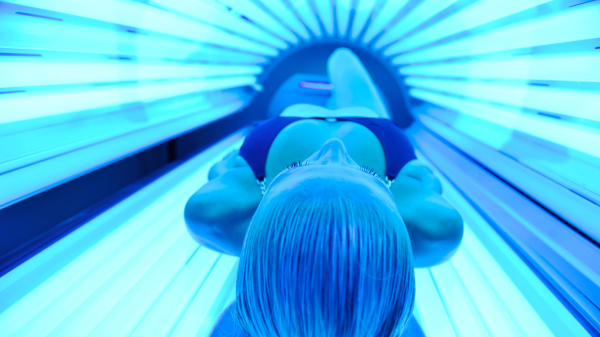
The Food & Drug Administration is scrapping a proposed rule that would ban American teenagers under 18 from using tanning beds. The rule, which was first proposed in 2015, aimed to restrict indoor tanning for minors for one very obvious reason: The UV light that these beds emit in high doses has been long-proven to cause skin cancer.
A spokesperson for the FDA told Allure in a statement that the agency withdrew the proposal “in order to reconsider the best means for addressing the issues covered by the Proposed Rule and related issues regarding access to sunlamp products.” Its decision came after the agency received more than 8,100 comments on the proposal—comments that they say ranged from “the dangers of UV radiation from sunlamp products” and the “vulnerability of young people to the risks of sunlamp products” to “support for personal choice and parental decision-making; availability” and “compliance burdens on small businesses.”
The notice of the withdrawal was signed by Health and Human Services Secretary Robert F. Kennedy Jr., who is known to frequent indoor tanning salons himself. (When asked by The Atlantic a few months ago how he squares his tanning and nicotine habits with his day job, Kennedy replied, “I’m not telling people that they should do anything that I do. I just say ‘Get in shape.’”)
In its statement, the FDA acknowledges the scientific link between tanning beds and skin cancer. “Withdrawal of the proposed restrictions does not mean that exposure to UV radiation does not cause skin cancer. It is well established that exposure to UV radiation (including through sunlamp products) can lead to skin cancer,” the statement reads. Despite this, they encourage “users of sunlamp products to discuss the potential risks with their physician before using sunlamp products”—a statement that ignores the fact that the risks are not potential. They’re confirmed by science.
Tanning beds—like tobacco, formaldehyde, and asbestos—are classified as a group 1 carcinogen by the World Health Organization's International Agency for Research on Cancer (IARC). And that's a message that many, many board-certified dermatologists have hammered home for Allure and our readers over the last three decades: Using tanning beds dramatically ups the likelihood of a skin cancer diagnosis. Full stop. These same dermatologists and health professionals now worry that the FDA's withdrawal of this proposed tanning bed restriction sends a confusing message to minors and their parents. Susan C. Taylor, MD, FAAD, and president of the American Academy of Dermatology, released a statement this week saying that the organization was “disappointed.”
“Exposure to UV radiation from indoor tanning devices is associated with an increased risk of melanoma, as well as non-melanoma skin cancers, including squamous cell carcinoma and basal cell carcinoma,” says Dr. Taylor. Part of what makes tanning beds so dangerous is that “they emit mostly UVA radiation and filter out the UVB that will burn you more readily—[tanning salons] don't want you to burn, they want you to come back,” says Dendy Engleman, MD, a board-certified dermatologist in New York City. “But UVA radiation ages you more readily, breaks down collagen more readily, and it's more oncogenic, meaning cancer-causing.”
And late last year, new research from Northwestern Medicine and the University of California, San Francisco, revealed that tanning bed usage is in fact even more dangerous than we knew. Before then, it was thought that indoor tanners were about 75% more likely to develop melanoma than those who have never tanned indoors, and that just one session in a tanning bed could increase the risk by 20%. But this latest research found that tanning bed usage actually triples the risk of skin cancer—that's a 200% increase. Not only that, through comparing 182 skin biopsies, the researchers showed the UV emitted from tanning beds caused unique DNA mutations, more damaging than previously known. “The takeaway is simple: Tanning beds don’t just age your skin, they biologically shift your cells toward cancer,” Mona Gohara, MD, a board-certified dermatologist and clinical professor at the Yale School of Medicine Department of Dermatology, told Allure at the time.
“The same way we do not want our teens to smoke, we do not want them to go to a tanning bed.”
This gap between irrefutable scientific proof and government policy can lead to widespread confusion, something Kavita Mariwalla, MD, double board-certified dermatologist in Long Island, New York, is very concerned about. “When the FDA, the organization tasked with determining the safety of medications and devices for the United States, backs off this proposal, it gives two signals,” she says. “The first is that it’s not an important issue and the second is that tanning isn’t dangerous enough for the FDA to get involved—both could not be farther from the truth.”
Currently, there is no federal ban on people under 18 using tanning beds; however, a number of individual states—including California, New York, Virginia, Illinois, and Texas—have bans in place for minors. Some states, such as Alabama, Washington, and Oregon, are considered to have bans but allow exceptions with a doctor’s prescription. Others—like Idaho, Michigan, and Utah—require a parent’s consent or supervision. But those rules are not always enforced. “In a lot of states, high schoolers can just go tanning on the way home from school and their parents don’t even know,” says Dr. Engelman, who is originally from South Carolina, a state where tanning bed operators are supposed to ask customers under 18 for written consent from a parent or legal guardian. “In my experience, in the South at least, tanning salons that should be asking for IDs and parental consent often aren’t.”
“Teen skin is particularly susceptible to ultraviolet damage.”
And even when parents have the opportunity to stop their teens from tanning, “it's hard to parent in 2026, and sometimes on the list of things you’re willing to go to battle on, tanning beds fall at the bottom,” says Dr. Mariwalla, a mother of three who sees young patients and their parents in her clinic daily.
Dr. Engelman, also a mother, agrees: “It’s like parents having to regulate smartphones and social media on our own. It’s on us to sign Wait Til 8th pledges and protect our kids. We know that it only takes one young person to make everyone else fall, everyone will crowd around that phone,” she says. Or follow that friend to a tanning salon. “It would be great to have bans on the things we know for a fact are particularly dangerous for young people, to have a governing body with an emphasis on health helping us to keep our kids safe.”
The stakes here are high. “Skin cancer has reached epidemic rates in the United States,” says Dr. Mariwalla, noting that despite dermatologists’ best efforts to educate the public and scientific advancements in treatment, the rate of melanoma deaths has not changed in years. The American Cancer Society estimates that new melanoma cases in 2026 will be 10.6% higher than in 2025. And before the age of 18, exposure to UVA-heavy radiation severely impacts your risk of being diagnosed with skin cancer, especially deadly melanoma, as an adult. “Teen skin is particularly susceptible to ultraviolet damage,” says Dr. Mariwalla, explaining that skin structure is more sensitive.
“Skin cancer has reached epidemic rates in the United States.”
Yet, despite overwhelming evidence that tanning is a dangerous habit, many people—particularly young people—continue to believe pervasive myths about it. Stimulating vitamin D production and providing a healthy “base tan” prior to vacation are two of the most common. According to a 2025 AAD survey, “Younger adults may not fully grasp the dangers—especially with the influence of social media trends that promote tanning.” With misinformation proliferating online, clear guidance and action on tanning dangers from the FDA is more important than ever.
“The [FDA’s] decision sends the wrong message—especially to young people—that tanning beds are safe, when they’re not,” Dr. Mariwalla says. “The same way we do not want our teens to smoke, we do not want them to go to a tanning bed.”
Leave a Reply